Pelvic floor dysfunction is a prevalent yet frequently underestimated issue that impacts a wide range of individuals, especially women, throughout various life stages. This article delves into the prevalence, multifaceted effects, and effective treatment strategies of pelvic floor dysfunction, providing valuable insights and solutions to those striving to enhance their pelvic health and overall well-being.
Why is the Pelvic Floor important?
The pelvic floor constitutes a funnel-shaped complex of muscles and connective tissues, providing crucial support for the pelvic organs, including the uterus, bladder, and bowel. These muscles serve to prevent bladder and bowel incontinence, as well as prolapse, while also playing a significant role in sexual function.
For the purpose of optimal continence and sexual function, the pelvic floor muscles must maintain a consistent resting tone while also possessing the capacity to contract rapidly and relax as needed for urination and defecation.

The pelvic floor also supports the correct posture of the spine, collaborating with the abdominal muscles, diaphragm, and back muscles. Together, these muscles generate internal abdominal pressure, crucial for maintaining the stability of the spine and trunk, and offering protection to the vertebrae, discs, and spinal cord against potential damage.
The diaphragm and pelvic floor collaborate to ensure efficient breathing. If this synergistic relationship is inhibited, such as inadequate breathing due to ineffective use of the diaphragm, it may result in excessive activation of pelvic floor musculature.
We could visualise our pelvic floor as a hammock providing a foundation for the pelvic organs in their natural position, while also partially transferring its tension to the carried organs. If the muscle tension is excessive or insufficient, the position and tension of the organs will consequently alter.
Symptoms of Dysfunctional Pelvic Floor
Persistent problems with the pelvic floor can arise from either hypotonic muscles characterised by weakened or excessively lax pelvic muscles or hypertonic muscles – overly tight or hyperactive pelvic floor muscles that hinder proper muscle contraction, often accompanied by pain.
Symptoms of HYPERTONIC pelvic floor
- pain during sexual intercourse and anorgasmia
- pain during menstruation
- discomfort in the tailbone, pelvic girdle, lower back or genitals
- urinary issues including incontinence, incomplete emptying of the bladder, increased frequency and urgency of urination, painful urination
- bowel difficulties, such as constipation, incomplete bowel emptying, and challenges in passing stool.
- pelvic organ prolapse – increased pressure on pelvic organs, resulting in sensation of bulging or pressure in the vaginal or rectal area
Symptoms of HYPOTONIC pelvic floor
- urinary incontinence, increased frequency of urination
- faecal incontinence
- pelvic organ prolapse: weakened pelvic floor muscles may inadequately support internal organs (such as the bladder and uterus), leading them to descend or prolapse into the vaginal canal or rectum, resulting in deep vaginal aching
- difficulty in fully emptying the bladder or bowel (constipation)
- sexual dysfunction – reduced vaginal sensation, discomfort during sexual intercourse
- sensation of pressure or heaviness in the pelvic area, anorgasmia
Causes of pelvic floor muscle dysfunction
Pregnancy – increased pressure on the muscles due to the expanding uterus accommodating the baby and hormonal changes
Childbirth – vaginal delivery may lead to the overstretching or damage of pelvic floor muscles
Postpartum recovery – insufficient rest after childbirth
Hormonal Changes – lower levels of estrogen during and after menopause
Chronic Constipation – straining during bowel movements puts pressure on the pelvic floor muscles
Pelvic surgeries – prostate or gynaecological surgeries
Chronic Coughing – persistent coughing may strain the pelvic floor muscles
Obesity – the pressure of excess weight on the pelvic floor muscles
Trauma or injuries – incidents affecting the pelvic area
Psychological Factors – stress, anxiety, fear, trauma and shame
Heavy lifting and straining – especially when accompanied by breath-holding or improper pelvic floor muscle relaxation
Ageing – atrophy of the pelvic floor muscles
How to Treat Dysfunctional Pelvic Floor
Relaxing a Hypertonic Pelvic Floor
- Release Tension in Connected Soft Tissues
- massage the soles of your feet with a ball or your hands, and relax the muscles around your lower jaw and mouth floor ( these areas are connected by a continuous chain of fascia, and changes or tensions in one area can affect the others along the same chain)
2. Practice Diaphragmatic Breathing
- lie on your back with your knees bent and place your hands on your belly; inhale deeply through your nose, expanding your abdomen, feeling your diaphragm descend, which gently stretches your pelvic floor; exhale slowly through your mouth, allowing your abdomen to fall and your pelvic floor muscles to relax
- repeat for 12-15 breaths
3. Engage in the Happy Baby Pose
- lie on your back, hold the inner edges of your feet or ankles, open your hips, widen your knees more than your torso and gently press your feet into your hands while focusing on diaphragmatic breathing

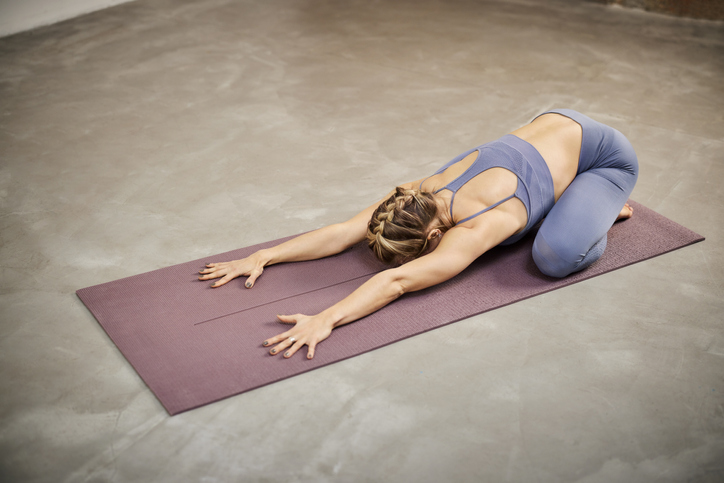
4. Rest in the Child Pose
- kneel on the floor with your knees hip-width apart and your big toes touching; sit back on your heels, lowering your torso between your thighs as you hinge from your hips, place your arms alongside your body, and rest your forehead on the mat, while focusing on diaphragmatic breathing
- pregnant women can choose to rest on their forearms
Strengthening a Hypotonic Pelvic Floor
The following exercises involve isolated contractions and releases of the pelvic floor muscles:
Contraction: visualise as if you are attempting to stop the flow of urine – sense the muscles contract, tighten, and lift, as though you’re drawing in a strand of cooked spaghetti, maintain for 3-5 seconds and release
Release: gently, gradually, and fully relax for an equal duration before repeating the contraction
- Lying position – Bridge
- lie down on your back with your knees bent and feet grounded on the floor, allowing your body to relax; take a deep inhale, exhale completely and hold the breath; lift your hips perform the contraction for 3-5 seconds, then release fully; move your hips back down and breath normally
- complete 10-12 repetitions
2. Sitting position
- sit comfortably on a chair or ball, with feet grounded on the floor (you can also place a rolled-up towel between your legs while sitting on a chair, ensuring it touches your perineum to enhance the sensation of the pelvic floor), lengthen your spine, imagine a straight line from the crown of your head to your tailbone
- while breathing, take a deep inhale, exhale completely and hold the breath; do the contraction for 3-5 seconds, then fully release while resuming normal breathing
- repeat 8-10 times

3. Standing position – Squat
- stand with your feet slightly wider than hip-width apart and toes pointing slightly outward, lengthening your spine by imagining a straight line from the crown of your head to your tailbone
- bending your knees and push your hips back as if sitting in a chair, ensuring your knees align with your second toes
- while breathing take a deep inhale, exhale completely, and hold the breath; perform the squat – hold it, contract your pelvic floor muscles for 3-5 seconds and release, return to a standing position and breath normally
- complete 8-10 repetition

Additionally..
- avoid stopping the flow of urine while on the toilet; contracting the pelvic floor muscles while urinating can disrupt the natural flow of urine and potentially lead to incomplete emptying of the bladder – this can increase the risk of urinary tract infections
- in case you have a major pelvic dysfunction issues, it’s crucial to consult a healthcare professional to determine the underlying cause and receive proper treatment
Thank you for your attention
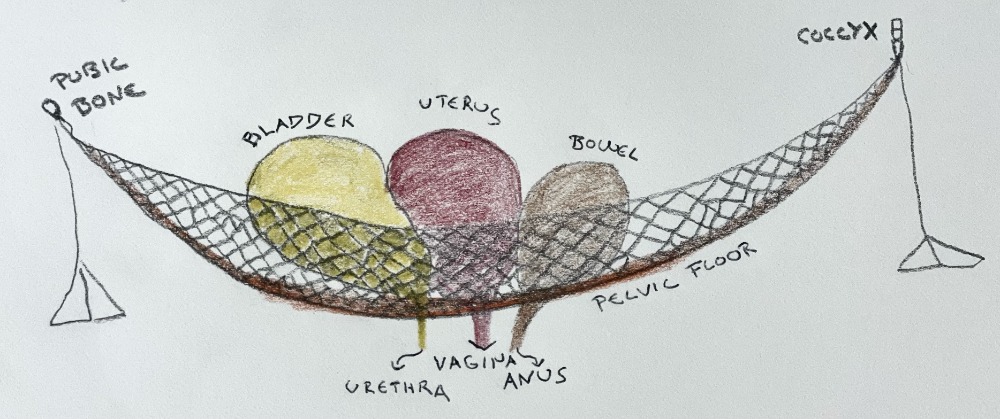
Pelvic floor as a hammock providing a support for the pelvic organs

 PHYSIO & yOGA by adel